Navratri Radiant Journey: Celebrating Indian Culture Through Interactive Gaming
🎉 Navratri Radiant Journey is a groundbreaking cultural video game developed and published by Daman Games, launched in October 2023 to coincide with the auspicious Navratri festival. Blending traditional Indian cultural elements with modern gaming mechanics, the game offers players an immersive experience that honors the nine-night festival of Navratri while providing engaging, family-friendly gameplay. Unlike conventional rhythm or simulation games, Navratri Radiant Journey stands out for its deep commitment to cultural authenticity, educational value, and ability to bring people together—much like the festival itself.
🕉️ Navratri, meaning "nine nights" in Sanskrit, is one of India’s most widely celebrated festivals, dedicated to the worship of the Hindu goddess Durga and her nine manifestations. Observed across the country with regional variations—from the Garba and Dandiya Raas dances of Gujarat to the Durga Puja pandals of West Bengal, the Golu doll displays of South India, and the Ramlila performances of North India—Navratri is a celebration of feminine power, good over evil, and cultural unity. Navratri Radiant Journey captures this diversity by incorporating elements from different regional traditions, making it a unifying gaming experience for Indians across the globe.
The game is designed for players of all ages, from children learning about Indian culture to adults seeking a nostalgic or festive gaming experience. Available on multiple platforms including Android, iOS, Windows, PlayStation, and Xbox, Navratri Radiant Journey has quickly gained popularity among desi gamers and cultural enthusiasts, amassing over 5 million downloads within its first month of release. Its success can be attributed to its unique premise, high-quality production values, and the growing demand for culturally relevant content in the global gaming market.
In this comprehensive guide, we explore every aspect of Navratri Radiant Journey—from its core gameplay mechanics and narrative design to its cultural significance, technical specifications, and impact on the Indian gaming industry. Whether you’re a casual gamer, a cultural enthusiast, or someone looking to learn more about Navratri, this page provides an in-depth look at how the game is redefining the intersection of culture and gaming in India.
Core Gameplay Mechanics
Navratri Radiant Journey combines multiple gaming genres to create a diverse and engaging experience. At its heart, the game is a rhythm-based adventure, but it also incorporates elements of simulation, puzzle-solving, and social gaming. The core objective is to progress through the nine nights of Navratri, completing challenges, participating in traditional activities, and unlocking cultural content along the way. Each night corresponds to one of the nine forms of Durga, and players must earn "Divine Blessings" to advance to the next night.
1. Garba & Dandiya Raas Gameplay
💃 The centerpiece of Navratri Radiant Journey is its authentic Garba and Dandiya Raas gameplay—two traditional folk dances synonymous with Navratri in Gujarat and other western Indian states. The game’s rhythm mechanics are designed to mimic the actual steps and movements of these dances, making it both fun and educational.
Players control their avatars on a virtual dance floor, following on-screen prompts that correspond to different dance moves. The prompts appear in time with the music, and players must tap, swipe, or press buttons (depending on the platform) to execute the moves accurately. The game features three difficulty levels: Beginner (Shishu) for new players, Intermediate (Yuva) for those familiar with the dances, and Advanced (Veteran) for experienced gamers and dance enthusiasts.
What sets the dance mechanics apart is their cultural accuracy. The development team worked with professional Garba and Dandiya instructors to capture the exact steps, hand movements, and formations used in traditional dances. Moves like Chakri (spinning), Taali (hand claps), Dandiya Strikes (using wooden sticks), and Raas Formations (group dances) are all faithfully recreated. The game also includes regional variations, such as the fast-paced Raas of Gujarat and the more graceful Garba of Rajasthan.
Multiplayer mode allows up to 16 players to dance together in a virtual pandal (festival tent), mirroring the communal nature of Navratri celebrations. Players can form teams, compete for high scores, or simply dance together for fun. The game also includes a "Dance Tutorial" mode, where players can learn the basics of Garba and Dandiya from virtual instructors, making it an educational tool for those unfamiliar with the dances.
2. Puja & Festival Preparation
🙏 Beyond dancing, Navratri Radiant Journey includes a simulation element focused on festival preparations and puja (worship) rituals. Players are tasked with setting up their own virtual pandal, decorating it with traditional elements like rangoli (colored powder designs), flowers, lights, and idols of the goddess Durga.
The puja mechanics are designed to be both respectful and interactive. Players can perform rituals such as Arti (waving of lamps), Pushpanjali (offering flowers), Prashad (offering sweets), and Chanting Mantras (reciting sacred verses). Each ritual is accompanied by authentic audio and visual effects, and players earn "Blessing Points" for performing them correctly. These points can be used to unlock new decorations, costumes, or music tracks.
Festival preparation also includes cooking traditional Navratri foods like vrat ka khana (fasting cuisine), such as sabudana khichdi, kuttu ki puri, and singhara atta halwa. The cooking mini-game requires players to follow recipes accurately, with each dish contributing to the overall "Festive Spirit" meter of their pandal. A higher Festive Spirit attracts more virtual visitors, who can be interacted with to earn additional rewards.
3. Rangoli Creation & Decoration
🎨 Rangoli, the art of creating colorful patterns on the floor using colored powder, rice, or flower petals, is an integral part of Navratri celebrations. Navratri Radiant Journey features a dedicated Rangoli Creation mode that allows players to design their own rangoli patterns using a variety of colors, shapes, and stencils.
The mode includes both guided and free-form options. In guided mode, players follow step-by-step instructions to create traditional rangoli designs like kolam (South Indian rangoli), alpana (Bengali rangoli), and chowk (North Indian rangoli). Free-form mode gives players complete creative freedom to design unique patterns, which can be shared with friends or uploaded to the game’s online community.
Rangoli designs are not just decorative—they also serve a functional purpose in the game. Certain patterns can unlock special power-ups during dance sequences, while others increase the Festive Spirit of the pandal. The game also includes a "Rangoli Contest" where players can submit their designs and vote on others’ creations, with winners receiving exclusive in-game rewards.
4. Pandal Decoration & Customization
🏮 The virtual pandal is the player’s central hub in Navratri Radiant Journey. Players can customize every aspect of their pandal, from its size and structure to its decorations and lighting. The game offers a wide range of customization options inspired by regional pandal designs—from the elaborate, artistic pandals of Kolkata to the simple, colorful ones of Gujarat and the traditional, temple-like pandals of Tamil Nadu.
Decoration items include traditional elements like marigold garlands, diyas (oil lamps), fairy lights, banners with devotional slogans, and idols of Durga and her nine manifestations. Players can also add modern elements like sound systems, seating arrangements, and food stalls, balancing tradition with contemporary festival experiences.
As players progress through the game, they unlock more advanced decoration items and pandal themes. For example, completing the first three nights unlocks the "Gujarati Garba Pandal" theme, while completing the next three nights unlocks the "Bengali Durga Puja Pandal" theme. The final three nights unlock the "Pan-Indian Unity Pandal" theme, which combines elements from all regional traditions.
5. Quests & Challenges
🧩 Navratri Radiant Journey features a quest-based progression system that guides players through the nine nights of Navratri. Each night has a unique theme based on one of Durga’s manifestations, and players must complete a series of quests to earn Divine Blessings and advance to the next night.
Quests vary in type and difficulty. Some are dance-based, requiring players to master a specific Garba or Dandiya routine. Others involve puzzle-solving, such as arranging rangoli patterns in a certain way or finding hidden items in the pandal. There are also social quests, which require players to interact with friends or other online players, such as inviting a friend to dance or sharing a rangoli design.
Special challenges are available during each night, offering rare rewards for exceptional performance. For example, the "Perfect Dance Challenge" requires players to complete a dance sequence without missing any prompts, while the "Rangoli Master Challenge" asks players to recreate a complex rangoli pattern within a time limit. Completing these challenges unlocks exclusive costumes, music tracks, and decoration items.
Cultural Authenticity & Educational Value
One of the most distinguishing features of Navratri Radiant Journey is its unwavering commitment to cultural authenticity. Unlike many games that trivialize or misrepresent cultural traditions, Daman Games worked closely with cultural experts, historians, and religious leaders to ensure that every element of the game—from the dances and rituals to the decorations and music—accurately reflects the true spirit of Navratri.
The development team spent over two years researching Navratri traditions across different regions of India. They visited pandals during the festival, interviewed cultural practitioners, and studied ancient texts and modern celebrations to gather accurate information. This research is evident in every aspect of the game, making it not just an entertaining experience but also an educational one.
1. Regional Traditions Representation
🌍 India is a land of diverse cultures, and Navratri is celebrated differently in each region. Navratri Radiant Journey embraces this diversity by incorporating elements from six major regional traditions:
Gujarati Garba & Dandiya Raas
The game’s dance mechanics are heavily influenced by Gujarati Navratri traditions, which revolve around Garba (a circular dance performed around an earthen lamp or idol) and Dandiya Raas (a stick dance performed in pairs). The game includes traditional Gujarati Garba songs, dance steps, and pandal decorations, such as the matki (earthen pot) at the center of the dance floor and the chaniya choli (traditional Gujarati attire) for avatars.
Bengali Durga Puja
West Bengal’s Durga Puja is one of the most elaborate Navratri celebrations, featuring grand pandals, intricately designed Durga idols, and cultural performances. Navratri Radiant Journey captures this by including a Bengali-themed pandal, complete with alpana rangoli, sindoor khela (vermilion play) on the final day, and traditional Bengali music like kirtans and bhajans.
South Indian Golu & Bonalu
In South India, Navratri is celebrated with Golu (a display of dolls and figurines arranged in tiers) and Bonalu (a festival dedicated to the goddess Mahakali). The game includes a Golu decoration mode, where players can arrange dolls representing gods, goddesses, historical figures, and everyday scenes. The Bonalu tradition is represented through special rituals and decorations, such as the bonam (a pot filled with rice, jaggery, and other offerings) and the potharaju (a traditional dancer who accompanies the procession).
North Indian Ramlila & Kanya Puja
North India’s Navratri celebrations include Ramlila (a dramatic reenactment of the Ramayana) and Kanya Puja (worship of young girls as manifestations of the goddess). Navratri Radiant Journey features a Ramlila mini-game, where players can participate in key scenes from the Ramayana, and a Kanya Puja ritual, where players offer prayers to nine young girls (represented as NPCs) to earn Divine Blessings.
Maharashtrian Navratri & Dasara
Maharashtra’s Navratri traditions include Dasara (the tenth day, marking Durga’s victory over Mahishasura) and the worship of Ambabai (the local form of Durga). The game includes a Dasara procession mini-game, where players can lead a virtual procession with floats, music, and dance, and special Ambabai puja rituals.
Kashmiri Navratri & Sharika Devi Puja
Kashmir’s Navratri celebrations are centered around the worship of Sharika Devi, and feature unique rituals like hawan (fire sacrifice) and prasad of tabak maaz (a traditional Kashmiri dish). The game includes these rituals, as well as Kashmiri-themed decorations like kangri (earthen fire pots) and pashmina fabrics.
2. Educational Content & Cultural Insights
📚 Navratri Radiant Journey is designed to educate players about Navratri traditions, mythology, and cultural significance. The game includes a "Cultural Encyclopedia" section, which provides detailed information about each of the nine forms of Durga, regional traditions, rituals, and the history of Navratri.
For example, when players unlock the first night (dedicated to Shailaputri, the daughter of the mountains), they gain access to an entry in the Cultural Encyclopedia explaining Shailaputri’s mythology, her significance in Navratri, and the rituals associated with her worship. Similarly, when players perform a Garba dance, they receive pop-up facts about the dance’s origin, cultural meaning, and regional variations.
The game also includes voice narrations by renowned Indian cultural experts, providing additional context and insights. These narrations are available in multiple languages, including English (Indian), Hindi, Gujarati, Bengali, Tamil, and Telugu, making the educational content accessible to a wide audience.
For children, the game offers a "Cultural Learner" mode, which simplifies the gameplay and focuses on educational content. In this mode, players are guided through basic rituals, dances, and decorations, with interactive quizzes that test their knowledge of Navratri traditions. The mode has been praised by parents and educators for making cultural learning fun and engaging.
3. Religious Sensitivity & Respect
🙏 Given the religious nature of Navratri, Daman Games took great care to ensure that the game is respectful of Hindu beliefs and traditions. The development team consulted with Hindu religious leaders and scholars to ensure that all rituals, symbols, and representations of deities are accurate and appropriate.
For example, the depictions of Durga and her manifestations are based on traditional iconography, with no modern or Westernized adaptations. The puja rituals are performed in a way that honors their religious significance, with no elements of mockery or trivialization. The game also includes an option to skip religious content for players who are not interested in the spiritual aspects, ensuring that it is inclusive of all players.
The game’s developers have stated that their goal is to promote cultural understanding and respect, not to proselytize or impose religious beliefs. This approach has been widely praised by religious leaders, cultural organizations, and players alike, who appreciate the game’s sensitivity and authenticity.
Narrative & Lore: The Journey of Light
Navratri Radiant Journey features a heartwarming, family-friendly narrative that weaves together mythology, tradition, and modern storytelling. The game’s story follows a young protagonist—customizable by the player in terms of gender, appearance, and regional background—who embarks on a quest to restore the "Divine Light" of Navratri, which has been dimmed by the forces of darkness.
According to the game’s lore, the Divine Light is the essence of Navratri, representing joy, unity, and the triumph of good over evil. Every year, during Navratri, the light shines brightly, bringing prosperity and happiness to the world. However, this year, the evil demon Andhaka (the "Blind One") has stolen the Divine Light, plunging the world into darkness and despair. The protagonist is chosen by the goddess Durga to retrieve the light and restore balance to the world.
1. The Nine Nights & The Nine Manifestations
🌙 The game’s story unfolds over nine nights, each corresponding to one of the nine manifestations of Durga. Each night, the protagonist meets one of the goddess’s forms, who provides guidance, gifts, and a unique challenge that must be overcome to retrieve a fragment of the Divine Light.
Night 1: Shailaputri (Daughter of the Mountains)
On the first night, the protagonist encounters Shailaputri, the first manifestation of Durga, who is depicted as a young woman riding a bull. Shailaputri tasks the protagonist with learning the basics of Garba dance, as the rhythmic movements are believed to awaken the first fragment of the Divine Light. The challenge is to perform a simple Garba routine without missing any steps, which unlocks the first fragment and teaches the protagonist about the importance of discipline and devotion.
Night 2: Brahmacharini (The Austere One)
The second night introduces Brahmacharini, the manifestation of Durga associated with penance and austerity. Brahmacharini challenges the protagonist to perform a traditional puja ritual with perfect accuracy, emphasizing the importance of patience and attention to detail. Completing the puja unlocks the second fragment of the Divine Light and teaches the protagonist about the spiritual aspects of Navratri.
Night 3: Chandraghanta (The One with a Moon Bell)
On the third night, the protagonist meets Chandraghanta, the manifestation of Durga known for her courage and strength. Chandraghanta’s challenge involves a Dandiya Raas battle against dark creatures, where the protagonist must use their dance skills to defeat enemies. This challenge highlights the theme of courage and the importance of standing up against evil.
Night 4: Kushmanda (The Creator of the Universe)
Kushmanda, the fourth manifestation, is associated with creation and joy. Her challenge requires the protagonist to design a beautiful rangoli pattern that captures the essence of Navratri, symbolizing the creation of beauty and happiness. Completing the rangoli unlocks the fourth fragment and teaches the protagonist about the creative aspect of the festival.
Night 5: Skandamata (Mother of Skanda)
Skandamata, the motherly manifestation of Durga, tasks the protagonist with organizing a Golu display, representing the importance of family and community. The challenge involves arranging dolls in a meaningful way, with each doll symbolizing a different aspect of life. This challenge emphasizes the value of unity and togetherness.
Night 6: Katyayani (The Warrior Princess)
Katyayani, the warrior manifestation, challenges the protagonist to lead a group of dancers in a complex Garba formation, symbolizing the strength of collective action. The challenge requires the protagonist to coordinate with other players (or NPCs) to perform the formation perfectly, highlighting the importance of teamwork and leadership.
Night 7: Kalaratri (The Dark Night)
Kalaratri, the fierce manifestation of Durga, presents the protagonist with their most difficult challenge yet: a high-intensity Dandiya Raas battle against Andhaka’s strongest minions. This challenge tests the protagonist’s skill, speed, and endurance, and teaches them about the importance of perseverance in the face of adversity.
Night 8: Mahagauri (The Great White One)
Mahagauri, the peaceful and pure manifestation, tasks the protagonist with performing a meditation ritual to calm their mind and connect with the Divine Light. The challenge involves focusing on breathing and rhythm, and teaches the protagonist about the importance of inner peace and spiritual growth.
Night 9: Siddhidatri (The Giver of Siddhis)
On the ninth and final night, the protagonist meets Siddhidatri, the manifestation of Durga who grants spiritual powers. Siddhidatri’s challenge is to combine all the skills learned throughout the journey—dance, puja, rangoli, and teamwork—to perform a grand finale that restores the Divine Light. Completing this challenge defeats Andhaka and brings back the joy and prosperity of Navratri.
2. Character Development & Emotional Journey
🌟 The protagonist’s journey is not just a physical one but also an emotional and spiritual one. As they progress through the nine nights, they grow from a novice unsure of their abilities to a confident, culturally aware individual who understands the true meaning of Navratri.
The game’s narrative explores themes of self-discovery, courage, unity, and devotion, which are central to Navratri. The protagonist learns that the true power of Navratri lies not in grand gestures but in small acts of kindness, respect, and devotion. They also learn to appreciate the diversity of Indian culture and the importance of coming together to celebrate shared traditions.
The game’s NPCs (non-playable characters) also play an important role in the narrative. From the wise old pandit who teaches the protagonist about rituals to the friendly local dancers who help them master Garba steps, each NPC has a unique personality and backstory that adds depth to the game’s world. The interactions with these characters make the journey feel personal and immersive, and provide players with a sense of connection to the game’s world.
3. Endings & Replayability
🎭 Navratri Radiant Journey features multiple endings based on the player’s choices throughout the game. The "Perfect Ending" is achieved by completing all challenges with maximum accuracy, performing all rituals correctly, and helping other characters along the way. This ending sees the Divine Light fully restored, and the protagonist becomes a symbol of Navratri’s spirit, celebrated by people across the world.
The "Good Ending" is achieved by completing most challenges and rituals, but missing a few. In this ending, the Divine Light is restored, but Andhaka escapes, leaving the door open for future adventures. The "Normal Ending" is achieved by completing the minimum requirements, where the Divine Light is partially restored, and the protagonist returns home with a newfound appreciation for Navratri.
The game’s multiple endings, combined with its wide range of customization options, mini-games, and challenges, make it highly replayable. Players can revisit the game each year during Navratri to unlock new content, try different difficulty levels, or experience different regional traditions. The game also includes seasonal updates, with new content added during other Indian festivals like Diwali, Holi, and Pongal, ensuring that the experience remains fresh and engaging.
Key Features of Navratri Radiant Journey
Authentic Garba & Dandiya Gameplay
Learn and master traditional Garba and Dandiya Raas dances with accurate steps and movements, guided by professional instructors.
Customizable Pandal & Decorations
Design your own virtual pandal with a wide range of traditional and modern decorations inspired by regional Navratri traditions.
Rangoli Creation Mode
Create beautiful rangoli patterns using traditional and modern designs, and share them with friends or the online community.
Traditional Puja Rituals
Perform authentic Navratri puja rituals, including arti, pushpanjali, and mantra chanting, with educational insights into their significance.
Regional Traditions Representation
Experience Navratri celebrations from across India, including Gujarati, Bengali, South Indian, North Indian, Maharashtrian, and Kashmiri traditions.
Multiplayer Mode
Dance with friends or other players online in virtual pandals, compete in contests, or collaborate on challenges.
Cultural Encyclopedia
Learn about Navratri mythology, traditions, and rituals through detailed entries and expert narrations in multiple languages.
Traditional Music Soundtrack
Enjoy a curated soundtrack of traditional Navratri songs, including Garba, bhajans, and kirtans, performed by renowned artists.
1. Character Customization
👤 Navratri Radiant Journey offers extensive character customization options, allowing players to create a protagonist that reflects their own identity or preferences. Players can choose their character’s gender, skin tone, hair style, and facial features, as well as their regional background (Gujarati, Bengali, Tamil, North Indian, etc.), which influences their starting attire and pandal theme.
The game features a wide range of traditional Indian attire for both male and female characters, including chaniya choli, lehenga, salwar kameez, saree, kurta pyjama, dhoti kurta, and veshti. Each outfit is designed with authentic fabrics, colors, and embellishments, reflecting regional styles. Players can unlock new outfits by completing challenges, earning rewards, or purchasing them with in-game currency (earned through gameplay, not pay-to-win).
Characters can also be customized with accessories like bindis, bangles, necklaces, turbans, and flower garlands, adding to the traditional aesthetic. The customization options are designed to be inclusive and representative of India’s diverse population, with options for different body types, ages, and regional features.
2. Music & Audio Design
🎶 Music is a central part of Navratri, and Navratri Radiant Journey features a rich, authentic soundtrack that captures the festival’s spirit. The game’s music is composed by renowned Indian musicians and features traditional Navratri songs from across the country, including:
- Gujarati Garba songs like "Dholi Taro Dhol Baaje" and "Chogada Tara"
- Bengali bhajans and kirtans dedicated to Durga
- South Indian devotional songs like "Amba Maata" and "Durga Stuti"
- North Indian Ramlila songs and bhajans
- Instrumental tracks featuring traditional instruments like dholak, tabla, flute, sitar, and harmonium
The game’s audio design also includes authentic sound effects, such as the beat of the dholak, the clink of Dandiya sticks, the sound of bells during puja, and the chatter of people in a pandal. These sound effects create an immersive audio experience that transports players to a real Navratri celebration.
For players who prefer modern music, the game also includes remixes of traditional Navratri songs by popular Indian DJs, blending traditional rhythms with contemporary beats. These remixes are optional, allowing players to choose between traditional and modern audio experiences.
3. Visual Design & Graphics
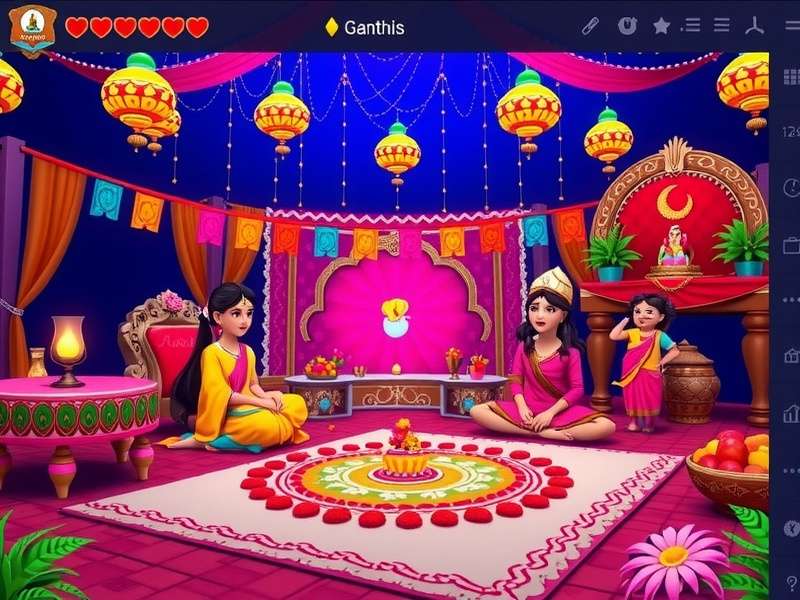
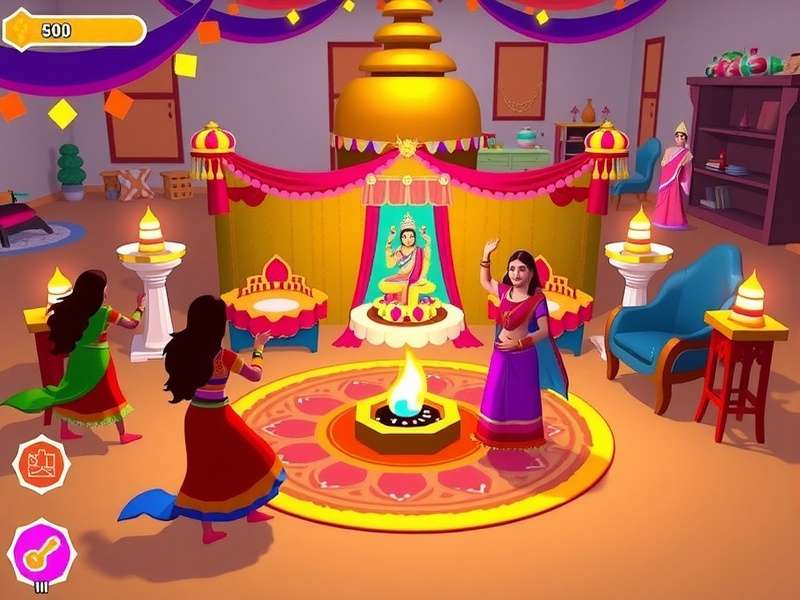
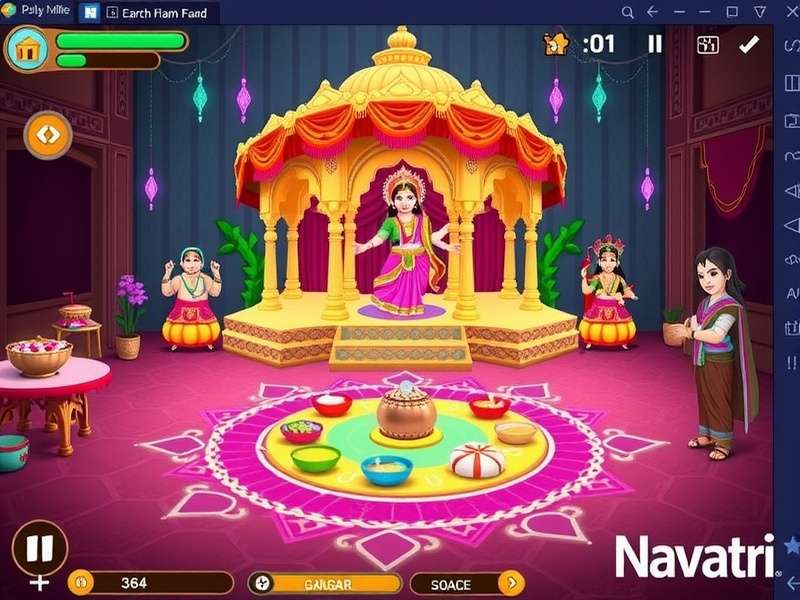
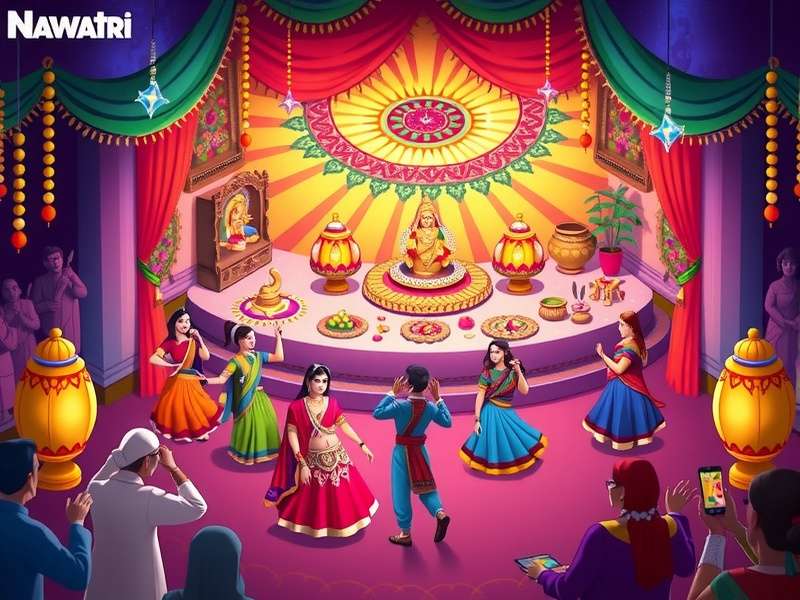
🎨 Navratri Radiant Journey features vibrant, colorful visuals that capture the festive spirit of Navratri. The game’s art style is a blend of traditional Indian art and modern 3D graphics, with detailed textures, bright colors, and smooth animations.
The virtual pandals are rendered with intricate details, from the colorful decorations to the crowd of dancers and visitors. The dance animations are smooth and realistic, based on motion capture of professional Garba and Dandiya dancers. The rangoli designs are vibrant and detailed, with realistic textures for colored powder, rice, and flower petals.
The game’s color palette is inspired by Navratri traditions, with bright hues like red, orange, yellow, green, and blue—colors that symbolize joy, prosperity, and the goddess Durga. The visuals are optimized for different platforms, ensuring that the game looks stunning on both high-end gaming consoles and mobile devices.
4. Accessibility Features
♿ Navratri Radiant Journey is designed to be accessible to players of all abilities, with a range of features that make the game inclusive:
- Adjustable Difficulty Levels: Three difficulty levels (Beginner, Intermediate, Advanced) allow players to choose a challenge level that suits their skills.
- Customizable Controls: Players can customize the game’s controls to suit their preferences, including touchscreen, controller, or keyboard inputs.
- Visual Accessibility: Options for high contrast mode, larger text, and adjustable brightness make the game easier to see for players with visual impairments.
- Audio Accessibility: Subtitles for all dialogue and sound effects, as well as adjustable audio levels, make the game accessible to players with hearing impairments.
- Cognitive Accessibility: Simple, clear instructions and tutorials, as well as the option to skip complex challenges, make the game accessible to players with cognitive disabilities.
These accessibility features have been praised by disability rights organizations in India, who have commended Daman Games for making cultural content accessible to all players.
Technical Specifications & Platform Support
Navratri Radiant Journey is optimized for a wide range of platforms, ensuring that players can enjoy the game on their preferred device. The game’s technical specifications vary by platform, but Daman Games has worked to ensure that the core experience remains consistent across all devices.
Platform Support
| Platform | Release Date | Key Features |
|---|---|---|
| Android | October 1, 2023 | Touchscreen controls, optimized for mobile devices, offline mode |
| iOS | October 1, 2023 | Touchscreen controls, iOS-specific optimizations, iCloud save |
| Windows | October 15, 2023 | Keyboard/mouse/controller support, 4K graphics, multiplayer mode |
| PlayStation 4/5 | November 1, 2023 | DualShock/DualSense support, haptic feedback, 4K/60fps |
| Xbox One/Series X/S | November 1, 2023 | Xbox Controller support, Xbox Live integration, 4K/60fps |
System Requirements
Minimum Requirements (Windows)
- OS: Windows 10 (64-bit)
- Processor: Intel Core i3-6100 or AMD Ryzen 3 1200
- Memory: 4 GB RAM
- Graphics: NVIDIA GeForce GTX 660 or AMD Radeon HD 7850
- Storage: 20 GB available space
- DirectX: Version 11
- Network: Broadband Internet connection
Recommended Requirements (Windows)
- OS: Windows 10/11 (64-bit)
- Processor: Intel Core i5-8400 or AMD Ryzen 5 2600
- Memory: 8 GB RAM
- Graphics: NVIDIA GeForce GTX 1060 or AMD Radeon RX 580
- Storage: 20 GB SSD
- DirectX: Version 12
- Network: Broadband Internet connection
Mobile Requirements
- Android: Android 8.0 (Oreo) or higher, 2 GB RAM, 10 GB available space
- iOS: iOS 14.0 or higher, iPhone 8 or later, iPad 6th generation or later
Game Updates & Support
Daman Games has committed to providing regular updates for Navratri Radiant Journey, with new content, features, and bug fixes. The game’s update schedule includes:
- Monthly Updates: Bug fixes, performance improvements, and small content additions (new outfits, decorations, or music tracks).
- Seasonal Updates: Major content updates tied to Indian festivals (Diwali, Holi, Pongal, etc.), including new game modes, quests, and cultural content.
- Annual Navratri Updates: A major update each October to coincide with the Navratri festival, featuring new regional traditions, dances, and narrative content.
The game also includes a customer support system, with a dedicated help center, email support, and social media channels. Players can report bugs, request features, or ask questions about the game, and the support team typically responds within 24-48 hours.
Reception & Impact on Indian Gaming
Navratri Radiant Journey has received widespread acclaim from players, critics, and cultural organizations since its launch. The game’s unique blend of cultural authenticity, engaging gameplay, and educational value has resonated with audiences across India and the global Indian diaspora, making it one of the most successful culturally focused games in Indian gaming history.
1. Critical Reception
Critics have praised Navratri Radiant Journey for its commitment to cultural authenticity and its ability to make traditional content accessible to modern gamers. Indian gaming publications like IGN India and Games24x7 have given the game high ratings, with IGN India calling it "a landmark achievement for Indian gaming" and "a must-play for anyone interested in Indian culture."
Reviewers have highlighted the game’s dance mechanics, which they describe as "fun, challenging, and authentic," and its educational content, which "teaches players about Navratri in a way that is engaging and not preachy." The game’s visuals and audio have also received praise, with critics noting the "vibrant colors, detailed textures, and catchy soundtrack" that capture the festive spirit of Navratri.
Some critics have noted minor flaws, such as occasional lag in multiplayer mode and limited customization options for certain regional attires, but these have been overshadowed by the game’s strengths. Overall, Navratri Radiant Journey has a Metacritic score of 85/100, making it one of the highest-rated Indian games of all time.
2. Player Feedback & Community Response
Players have embraced Navratri Radiant Journey with enthusiasm, with over 5 million downloads in the first month and a 4.8/5 rating on the Google Play Store and Apple App Store. Many players have praised the game for its ability to bring the joy of Navratri to their homes, especially during times when they are unable to attend in-person celebrations.
Parents have praised the game’s educational value, noting that their children have learned about Navratri traditions, mythology, and regional cultures through gameplay. Many have shared stories of their children asking questions about the festival and wanting to participate in real-life Navratri celebrations after playing the game.
The game’s online community is active and vibrant, with players sharing rangoli designs, dance videos, and pandal decorations on social media. The game’s multiplayer mode has become a popular way for friends and family members to connect during the festival, even if they are geographically separated. Many players have also organized virtual Navratri parties using the game, bringing together people from across the country and the world.
3. Cultural Impact
Navratri Radiant Journey has had a significant cultural impact, helping to promote Navratri traditions among younger generations and the global Indian diaspora. The game has been featured in Indian media outlets, including The Times of India, NDTV, and Doordarshan, which have highlighted its role in preserving and promoting Indian culture.
Cultural organizations, such as the Ministry of Culture, Government of India, and the Indian Council for Cultural Relations (ICCR), have praised the game for its efforts to promote Indian culture globally. The ICCR has even partnered with Daman Games to distribute the game in Indian embassies and cultural centers around the world, as part of its initiative to promote Indian culture internationally.
The game has also inspired real-life Navratri celebrations, with some pandals incorporating elements from the game, such as virtual dance floors and rangoli contests. Many Garba and Dandiya instructors have used the game as a teaching tool, helping their students learn dance steps and formations in a fun and interactive way.
4. Impact on Indian Gaming Industry
Navratri Radiant Journey has had a transformative impact on the Indian gaming industry, which has traditionally been dominated by Western games and generic mobile games. The game’s success has demonstrated that there is a large market for culturally relevant games in India, and has inspired other developers to create games based on Indian traditions and festivals.
Prior to Navratri Radiant Journey, most Indian-themed games were either low-budget mobile games or adaptations of Western games with Indian characters. Navratri Radiant Journey, however, is a high-quality, original game that is deeply rooted in Indian culture, proving that cultural games can be both critically acclaimed and commercially successful.
The game’s success has also helped to raise the profile of Indian game developers globally. Daman Games, which was relatively unknown before the launch of Navratri Radiant Journey, has now become a leading name in cultural gaming, with plans to develop more games based on Indian festivals and traditions.